
Not long ago, the teaching tools in the typical school classroom consisted of little more than blackboards, paper, and pencils. Today, educators and students have multiple technologies available to them. A school classroom may now include:
- Computer workstations and charging stations
- Digital projectors, whiteboards, smart screens, and displays
- Mobile devices such as notebooks and tablets
- Scanners, printers, cameras, and A/V equipment
- Servers, switches, and networking equipment
- Augmented reality (AR) devices
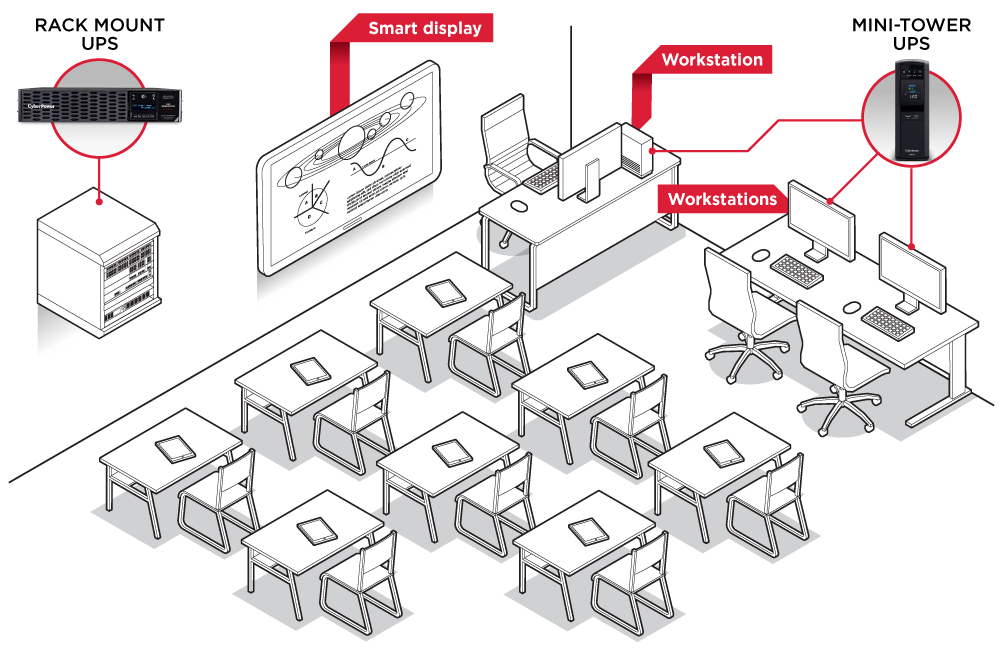
The increase in digital learning technologies has led to a steady rise in demand for IT infrastructure in schools and libraries. But keeping up with this new technology and purchasing equipment to support consistent, reliable internet access can be a budget buster. Fortunately, school districts can utilize the E-Rate program, which provides funding so that schools and libraries can support students’ access to these technology tools. Under the E-Rate program, schools and libraries are awarded federally funded discounts based on economic need. Schools and libraries apply for funding to offset costs of networking equipment to support internet access, and internal connections.
Click here to see who is eligible for the E-Rate program: https://www.usac.org/E-Rate/
Eligible products and services under the E-Rate Program are divided into two categories:
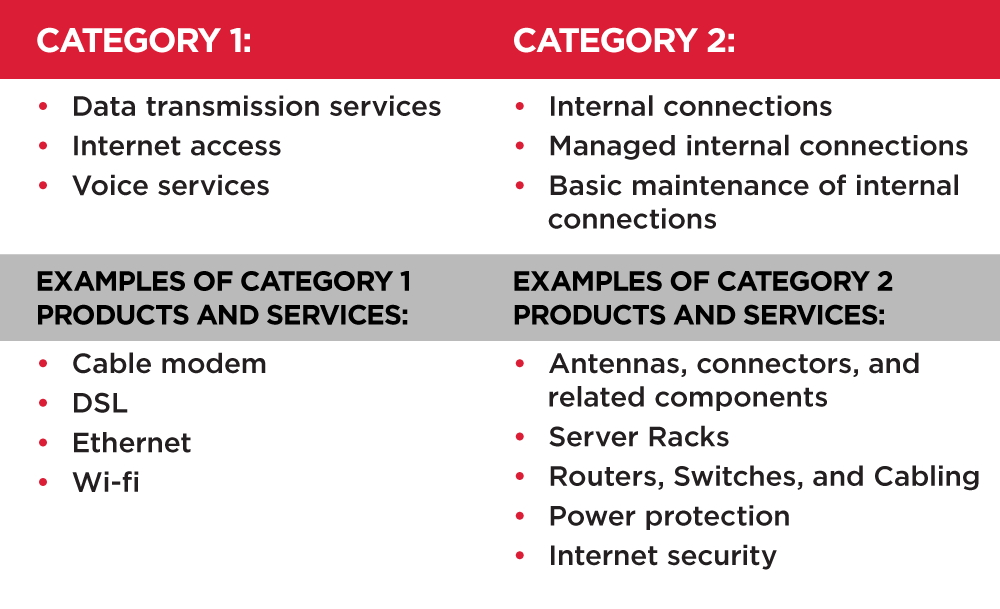
Powering educational opportunities
Battery backups, or Uninterruptible Power Supply (UPS) systems, fall into power protection under Category 2 and are a critical component of uninterrupted learning. They provide reliable power to technology devices, ensuring consistent access to broadband services and digital content.
UPS systems with surge protection and battery backup ensure technology devices stay powered during outages and are protected from harmful surges, spikes, and shutdowns. With UPS systems, schools ensure continuous availability of broadband and telecommunication networks, minimize downtime during minor power fluctuations, and prevent data loss and damage that can occur during power failures.
E-Rate timelines
Major IT infrastructure changes can be a major undertaking and requires advanced planning for schools and libraries. With E-Rate, deadlines change from year to year, so when applying for E-Rate, keep the program due dates in mind. Below is a high-level look at a typical E-Rate funding year. Visit https://www.usac.org/sl for official deadlines and updates.
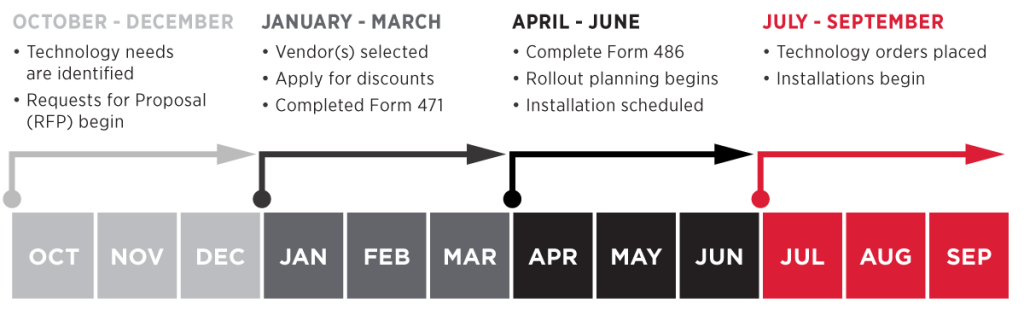
E-Rate: Planning for the future
The E-Rate program operates on a five-year budget cycle. With each new cycle, terms are updated to align with current technologies and the educational needs of students. Here are the updates for the 2026-2030 cycle:
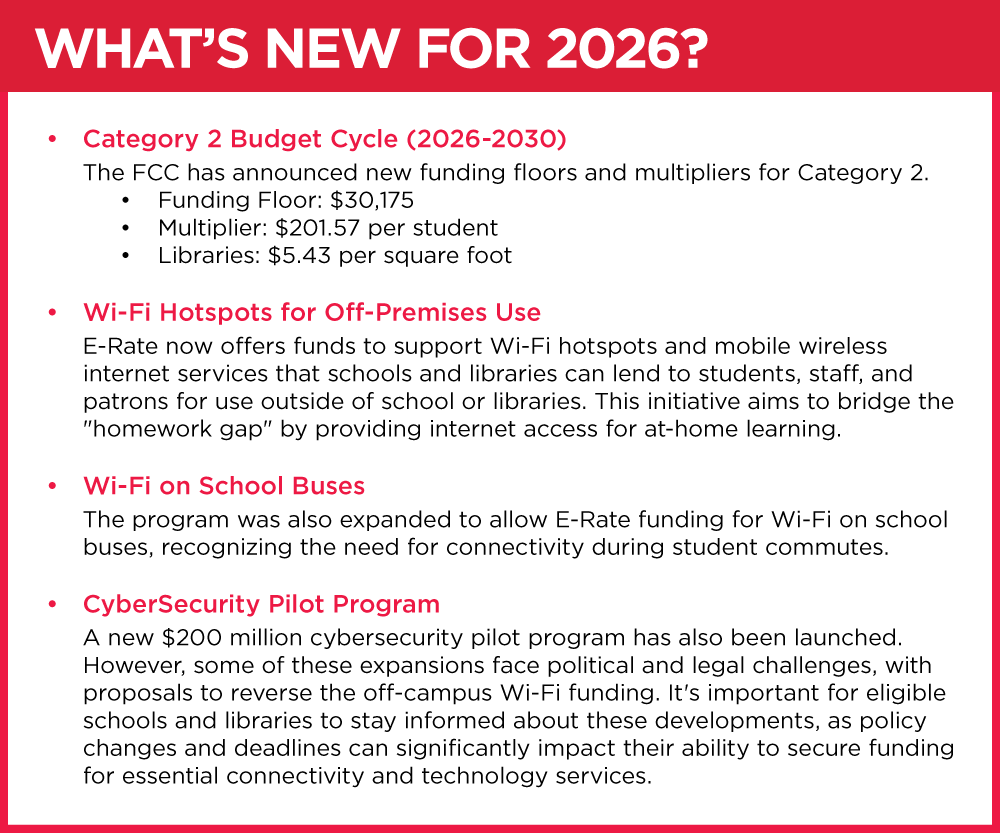
Empowering Digital Learning Through E-Rate Funding
As technology needs in schools and libraries evolve, reliable infrastructure is essential to support digital learning. The E-Rate program plays a vital role in helping to bridge the gap between educational needs and budget constraints. From internet connectivity to hardware and power protection, E-rate funding empowers educational organizations to build technology-driven learning environments for now and in the future. Make sure your students have access to the latest learning technology and take advantage of E-Rate discounts by starting your planning early. Visit www.usac.org/E-Rate for more information and to determine your 2026 E-Rate program funding opportunities.
Want to learn more?
Powering Education through the E-Rate Program


